

| PaleoFest: March 3rd & 4th, 2012 |
| Museum Hours and Admission |
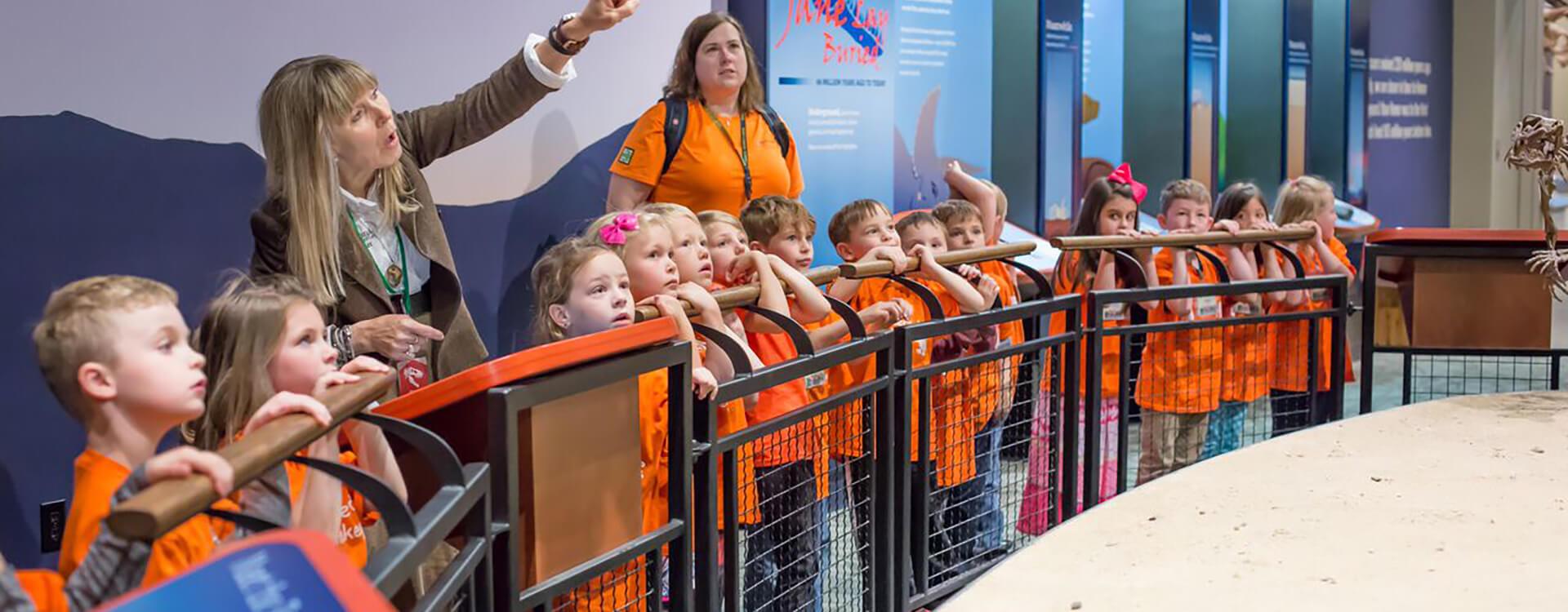
Hours: March 3rd & 4th, doors open 10:00 am - 5:00pm; free children's DinoBlast activities with admission 11:00am - 4:00pm; lectures begin at 10:30am on Saturday March 3rd, and at 10:15am on Sunday March 4th.
*NEW THIS YEAR*: Any children who complete all DinoBlast activities and attend Dr. Scott's children's lecture will receive
an official "Junior Paleontologist" certificate, signed by Dr. Scott himself!
Order PaleoFest Tickets: Call 815-965-3433 or visit www.burpee.org or CLICK HERE
FREE Parking: CLICK HERE to download our new parking map.
PaleoFest Admission: $10 per person, Burpee Members are FREE! Admission includes children's DinoBlast Passport activities and Ice Age Mammals exhibit. Coupons and reciprocal memberships are not valid March 3rd & 4th. Dr. Scott Sampson's children's lecture is not included in the PaleoFest admission price.
Need something to nosh on? No need to leave Burpee- Zammuto's will be serving up simple sandwiches and snacks all weekend!
|
|
| Lecture Tickets and Passes |
2-DAY PASS: $70/non-member, $60/member
Includes admission to 8 lectures in the Riverview Room, Ice Age Mammals and the festival activities at Burpee Saturday and Sunday.
1-DAY PASS: $35/non-member, $30/member
Includes admission to 4 lectures in the Riverview Room, Ice Age Mammals and the festival activities at Burpee on either Saturday or Sunday.
Individual Tickets: $10/non-member, $8/member
Includes admission to selected lectures ONLY. Museum admission is required to attend lectures.
1 Talk /1 Day Admission: $15 Includes one day admission and your choice of one lecture. Savings of $5, great for students!
Order Tickets: call 815-965-3433 or visit www.burpee.org, or CLICK HERE |
| Family Workshops |
Family Workshops
Workshops consist of two parts – you will see a presentation filled with fun facts and exciting information, and you will create a “make and take project." Children must be accompanied by an adult; recommended for ages 6 and up.
Tickets: $10/non-member child, $8/non-member adult, $8/member child, $6/member adult. Includes admission to selected workshop. Please fill in day and time on your order form. PaleoFest admission is required to attend workshops.
SATURDAY MARCH 3RD:
11:30 AM The Rise of the Modern Amphibians
On a damp spring night the air is filled with the croaks of little local frogs, our most familiar amphibian. Step back in time to a period when amphibians were the apex predators. Discover the earliest amphibians to inhabit the wetlands of the earth. Learn more about Eryops, the giant amphibian of Burpee’s coal forest. In the craft session you will make your own model of a prehistoric amphibian.
3:30 PM Jaws and Claws
T. rex had teeth the size of bananas while Therizinosaur’s claws were like sickles. Paleontologists ponder whether huge claws were in response to huge teeth or were the teeth a result of the huge claws of various dinosaurs. Discover the latest ideas of paleontologists about the spectacular jaws and claws of dinosaurs. In the craft session you will make a cool tooth or claw project.
SUNDAY MARCH 4TH:
11:30 AM Mammoths and Mastodons: The Real Story
Imagine when these giants roamed Rockford. Discover how Mammoths and Mastodons are alike and different. With the melting of the permafrost in areas where it has never before thawed, discoveries are providing amazing insights about these Proboscideans. Learn about the baby mammoth Lyuba and other discoveries. In the craft session you will make a miniature diorama showing the habitat these creatures lived in.
3:30 PM Horns and Frills
Burpee Museum’s Homer is a beautiful teenage Triceratops with his 3 horns. Joining him now are skulls of a Diabloceratops and a Kosmoceratops with five times as many horns. With this variety of horns and frills paleontologists are debating their purpose. Learn about these functions and participate in simulated research. In the craft session you will make a mask of a Ceratopsian. |
| DR. SCOTT SAMPSON'S CHILDREN'S LECTURE- Sunday, March 4th at 1:00 p.m. |
“Dr. Scott Talks DINOSAURS!”
Held at the Rockford Woman's Club; Rockford Theatre.
*No video or audio recording permitted during the presentation.*
In this presentation aimed at kids, Scott Sampson -- better known as Dr. Scott the Paleontologist, host of hit PBS KIDS series Dinosaur Train -- will talk about (what else?) dinosaurs! Kids will learn how to be a paleontologist -- from finding dinosaur bones and digging them up to preparing the fossils back at the museum and making big discoveries!
Tickets: General $20, Member $15 Prices include museum admission and will increase on PaleoFest weekend.
**Presentation followed by meet and greet/book signing** |
| DINNER LECTURE - Saturday, March 3rd at 7:30 p.m. |
|
Dinner Lecture Tickets $50/non, $40/members
The dinner lecture will be held at Burpee Museum.
Includes a buffet dinner, access to all exhibits, and Dr. Sampson's presentation.
Doors open at 6:00pm, buffet stations open at 6:30, lecture begins at 7:30.
Keynote Address: Dr. Scott Sampson,
“Dinosaurs of the Lost Continent”
*No video or audio recording permitted during the presentation.*
For about 20 million years of the Cretaceous time period, between 90 million and 70 million years ago, eastern and western North America were separated by a shallow seaway that extended from the Arctic Ocean to the Gulf of Mexico. The peninsula-like western landmass, known as Laramidia, witnessed a tremendous florescence of dinosaurs and other amazing creatures. This family-friendly presentation will summarize recent astounding discoveries made by Sampson's team in the rugged badlands of southern Utah -- from ornate-headed horned dinosaurs to giant tyrannosaurs and even bigger crocodiles! |

Photo Credit: Jedrzej Borowczyk |
|
| Membership |
Join and Save -Burpee Museum Membership |
| Lecture Line Up |
Saturday
10:30 AM Larry Agenbroad Ph.D., Mammoth Site; Hot Springs, ND,
The Mammoth Site of Hot Springs, South Dakota: an in situ exhibit of Mammoths and Associated Fauna
The world famous Mammoth Site was first discovered in 1974. Over the last nearly 40 years, this amazing site continues to progress and reveal an exciting Pleistocene Story. Dr. Agenbroad will be your guide!
12:00 PM Thomas Holtz, Ph.D., University of Maryland,
Jaws and Claws through Time and Space: Shifting Patterns of Predation among Carnivorous Dinosaurs Through the Mesozoic
During the Age of Dinosaurs, the diversity of theropods changed and as did the modes of predation. From T.rex to the “raptors”, different groups of theropods emphasized different forms of prey capture and prey dispatch (in terms of locomotion; tooth, jaw, and claw form; and sensory. Dr. Holtz will mediate this Mesozoic Arms race.
2:00 PM Jason Anderson, Ph.D., University of Calgary,
The Origin of Modern Amphibians: What Mazon Creek tells us
Frogs, toads and salamanders can trace their origins back 300 million years. During the Pennsylvanian Period, these familiar faces weren’t so familiar. They came in all shapes and sizes, large and small, legs and no legs. Illinois own Mazon Creek holds some answers on this hardy group of vertebrates.
3:30 PM Lawrence Witmer, Ph.D., Ohio University,
The Visible Dinosaur: integrating science, technology, and outreach
The latest advances in high-tech imaging and 3D computer modeling, combined with old-school anatomy, allow us to “flesh out” dinosaurs in unprecedented ways, shedding new light on dinosaur biology and providing a vehicle to engage the public about science
7:30-8:30 PM Saturday March 3rd Dinner/Keynote Presentation
Scott Sampson, Ph.D., “Dinosaurs of the Lost Continent”
For about 20 million years of the Cretaceous time period, between 90 million and 70 million years ago, eastern and western North America were separated by a shallow seaway that extended from the Arctic Ocean to the Gulf of Mexico. The peninsula-like western landmass, known as Laramidia, witnessed a tremendous florescence of dinosaurs and other amazing creatures. This family-friendly presentation will summarize recent astounding discoveries made by Sampson's team in the rugged badlands of southern Utah -- from ornate-headed horned dinosaurs to giant tyrannosaurs and even bigger crocodiles!
Sunday
10:15 AM Robert McAfee, Ph.D., Ohio Northern University,
The Paleontology of Sid the Sloth
The fast paced world of Sid the Sloth is broken down. What is a sloth? How many kinds of sloths were there? What do fossils from North America tell us about the paleoecology and habits of sloths during the last Ice Age?
11:45 AM Fred Smith, Ph.D. Illinois State University,
Neandertals and the Beginning of People Like Us
Neandertals are the people that inhabited Europe, the Near East and parts of Central Asia during the last Ice Age. For tens of thousands of years, they occupied these areas along with modern humans and then they disappear from the fossil record. Where did Neandertal go and how did this affect humans?
2:00 PM Lance Grande, Ph.D., Field Museum,
Snapshots from deep time: the 52-million year old community of Fossil Lake, locked in stone.
Fossil Lake of the Green River Formation is one of the most prolific fossil localities in the world. Every year, tens of thousands of fossil are collected from this amazing site giving paleontologists a comprehensive view of an Eocene lake ecosystem. Dr. Grande will lead us on a tour of this famous fossil site.
3:30 PM, Virginia Naples, Ph.D., Northern Illinois University,
The Other Saber-Tooths: Scimitar-toothed Cats of the Western Hemisphere
Dr. Naples will talk about the discovery of two new Scimitar-toothed cats as well as, their parallels and divergences from the more widely known Saber-toothed cats of the Pleistocene.
Order Tickets: call 815-965-3433 or visit www.burpee.org, or CLICK HERE
|
| Speakers |
Larry Agenbroad Ph.D., Mammoth Site; Hot Springs, ND
Dr. Agenbroad was born and raised in Idaho. After high school and military service, he earned an M.S. Geology, M.A. Anthropology, and a Ph.D. Geology. He has worked professionally as a mine geologist, exploration geophysicist, geophysicist-hydrologist on an AEC nuclear test, and as a professor. In 2002 he was awarded an honorary doctorate of Humane Letters; in 2005 he was awarded the Lowell Thomas Medal for Exploration by the Explorer’s Club of New York City. He has been active in Quaternary research since 1966, engaging in archeological, geological, hydrological, and paleontological work all over the American Southwest, Mexico and Siberia. He has been involved in the investigation of several buffalo jumps, the excavation and analyses of several mammoth-kill sites, research on the Quaternary deposits and fauna of the Colorado plateau (including the first intact boli of mammoths), and various other geological research. He was the principal investigator of the pygmy mammoths of the northern Channel Islands, and assisted in the recovery and research of frozen mammoths in Siberia. He has written numerous professional publications and books. |
 |
Thomas Holtz, Ph.D., University of Maryland
Dr. Thomas R. Holtz, Jr., is a dinosaur paleontologist and senior lecturer of vertebrate paleontology in the Department of Geology at the University of Maryland, College Park, USA. His primary research specialty is the origin, evolution, functional anatomy, and paleobiology of carnivorous dinosaurs, and most especially of the Tyrannosauroidea (tyrant dinosaurs). He has also published on the effect of plate tectonics on dinosaur evolutionary history and distribution. Recent works include several chapters in University of California Press’ The Dinosauria, Second Edition and in the forthcoming second edition of the University of Indiana Press’ The Complete Dinosaur. In addition to his technical publications, Dr. Holtz has written several books for children, most recently Dinosaurs: The Most Up-To-Date Encyclopedia for Dinosaur Lovers of All Ages (Random House; see http://www.geol.umd.edu/~tholtz/dinoappendix for updates). Additionally, he has been a consultant on numerous TV documentaries (including BBC’s Walking with Dinosaurs, the History Channel’s Jurassic Fight Club, and Discovery Channel’s Prehistoric: Washington, D.C., Monsters Resurrected, and Dinosaur Revolution), and several museum exhibits.
His website can be found here: Dr. Holtz's Webpage |
 |
Jason Anderson, Ph.D., University of Calgary
Dr. Anderson's lab focuses on the emergence of higher level groups, and the study of details of life history of vertebrates. He is interested in the origin of modern amphibians (frogs and toads, salamanders and newts, and the limbless caecilians or 'rubber eels'), specifically the morphology of the braincase and inner ear of modern and fossil amphibians. From his undergraduate days he retains an interest in ceratopsians, and will be conducting field work in Southern Alberta in a quest for ceratopsian material to learn more about the life history of these interesting animals. He also works on possible mechanisms for niche partitioning, and looks at Early Triassic deposits for clues into the origin and early evolution of ichthyosaurs. Many of the molecular clocks used to date evolutionary splits are calibrated with the early fossil record of amniotes, so Dr. Anderson is interested in better understanding the exact nature of these first divergences; this will help more precisely place dates to events, and improve molecular clock resolution. |
 |
| Lawrence Witmer, Ph.D., Ohio University
Lawrence M. Witmer is a Professor of Anatomy at the Ohio University Heritage College of Osteopathic Medicine in Athens, Ohio, where he has lived with his wife and son since 1995. An important aspect of this research is “fleshing out” fossil dinosaurs and their kin with the soft tissues not normally preserved as fossils. His current research on the brains and ears of dinosaurs will have a major impact on interpretations of behavior and activity. In addition to classical anatomical approaches (e.g., dissection), Witmer has been a leader in the X-ray computed tomography (CT scanning) of modern animals as well as dinosaur fossils. This diverse research program has carried Witmer all over the world, from dissecting crocodilians in Louisiana and India to studying the earliest bird Archaeopteryx in Germany. Witmer has received numerous grants from the National Science Foundation, and has published articles in Science, Nature, and many in other technical journals. He has appeared on dozens of internationally televised documentaries, as well as commenting on NPR and other national media. He was awarded the Ohio University Presidential Research Scholar Award for 2004–2009, and is the Chang Ying-Chien Professor of Paleontology. |

Photo Credit: Neil Ever Osborne |
Scott Sampson, Ph.D.
Scott Sampson is an internationally recognized dinosaur paleontologist, evolutionary biologist, author, educator, and T.V. personality, and serves as Research Curator at the Utah Museum of Natural History at the University of Utah. After receiving his Ph.D. in Zoology at University of Toronto, he served as a research assistant at the American Museum of Natural History in New York City, spent five years as an Assistant Professor of Anatomy at New York College, and had teaching positions at the University of Utah. Scott has conducted field research all over the world, including Madagascar, Mexico, South Africa, Kenya, Zimbabwe, and of course, the United States.
His current research focuses on the paleontology of Grand Staircase-Escalante National Monument in southern Utah. This work has yielded abundant fossil of previously unknown dinosaur species. Scott has published numerous scientific papers, popular articles, and a new book: "Dinosaur Odyssey: Fossil Threads in the Web of Life". Scott has been seen regularly on several paleo-documentaries aired on the Discovery Channel, Science Channel, and National Geographic.
Scott is also the host (known as Dr. Scott) of the extremely popular PBS Children’s T.V. show, Dinosaur Train, which is beginning its 3rd season. Dinosaur Train started in 2009 and was created by the Jim Henson Company. The show introduces children to the building blocks of science with a fun and whimsical format, often reinforcing what the actual paleontological research demonstrates. This show has been wildly popular with pre-school through 1st grade children and has received positive reviews from many family organizations. In September 2011, Dinosaur Train’s ratings landed it in the TOP 10 for children’s shows after almost 2 million kids tuned in for a Dinosaur Train special. It is estimated that Dinosaur Train is seen by over 9 million households every month. |

Photo Credit: Jedrzej Borowczyk |
Robert McAfee, Ph.D., Ohio Northern University
Dr. McAfee’s primary interests are in the fields of vertebrate paleontology and functional morphology, with a focus as a slothologist upon the extinct ground sloths of North and South America. Specific interests involve redefining sloth taxonomy using quantitative characters to supplement the traditional qualitative characterizations, reconstruction of muscle patterns using comparative dissections of modern taxa, and analysis of biomechanical capabilities utilizing the reconstructed lines of muscular action and morphometric methodologies. Current efforts involve a reconstruction of the cranial musculature in the Haitian forms of the ground sloth, Neocnus, along with morphometric estimations of bite force to explore the feeding apparatus and habits of these sloths. These investigations have implications for further understanding the Megalonychids of the Greater Antilles and the evolution of feeding characters leading to the extant tree sloth, Choloepus. Additionally, he is also exploring the differential shape changes in the atlas bones of sloths that result from changing muscle patterns and articulation with posterior cranium, in order to assess the relation of those changes to head posture and potential locomotor habits. |
|
Fred Smith, Ph.D. Illinois State University
Fred H. Smith is a human paleontologist with specific interests in Neandertals and the broader question of the origin of modern humans. Currently, Smith is Professor of Anthropology and Biological Sciences and Chair of the Department of Sociology and Anthropology at Illinois State University, where he teaches courses in human paleontology, human osteology, and vertebrate biology and evolution. Smith has been the author of over 150 scholarly publications; his 1984 book, "The Origins of Modern Humans", was named the best book in the life sciences that year by the American Association of Publishers. His most recent book, "The Human Lineage", was published in 2009 by Wiley-Blackwell. Smith has researched human fossil remains throughout Europe, West Asia and Africa but is best known for his studies on Neandertals, particularly those in Central Europe. He argues that Neandertals and other Eurasian archaic human populations made small, but not insignificant, contributions to modern human populations in Eurasia. In 2006, he received the first annual Hermann Schaaffhausen Prize (Germany) for research on Neandertals and, in 2009, the Dragutin Gorjanovi-Kramberger Medal from the Croatian Academy of Sciences. Smith continues to pursue active field work in both Germany and Croatia. |
 |
Lance Grande, Ph.D., Field Museum
Dr. Grande started as Vice President and Head of Collections and Research in July of 2004. He has been a curator in the Geology Department of Field Museum for over 21 years. He holds the appointment of Adjunct Professor of Biology at both the University of Illinois and the University of Massachusetts. He is a member of the Committee on Evolutionary Biology at the University of Chicago, and a Research Associate in the Department of Vertebrate Paleontology at the American Museum of Natural History in New York. Dr. Grande’s main research program is an interdisciplinary one that focuses on the biodiversity and evolution of fishes (both living and fossil). His strongest interests include Ichthyology, comparative anatomy, paleontology, biogeography, and systematics (theory, method and practice). He has authored seven scientific books, including a book on the paleontology of the Green River Formation that is considered to be a classic work for that region. He has also published over 100 scientific journal articles, book chapters, abstracts, and popular articles. He is on the editorial boards of The Journal of Vertebrate Paleontology and Revista. |
|
Virginia L. Naples, Ph.D. Northern Illinois University
Dr. Naples has taught at Northern Illinois University for many years, lecturing on subjects such as human gross anatomy, comparative anatomy, vertebrate paleontology, and forensic sciences. She actively researches many groups of vertebrates but focuses on mammals. Some of her early research was centered on sloths, but her book on scimitar-toothed cats will be published in May, demonstrating the vast range of her research. Her work takes her all over the world, and to date the only continent she hasn't visited is Antarctica. Dr. Naples newest book, "The Other Saber-tooths: Scimitar-tooth Cats of the Western Hemisphere", was recently published by John Hopkins Press. |
 |
Mark March 3rd & 4th, 2012 on your calendars and don't miss the Burpee Museum's 14th Annual PaleoFest!
Dr. Scott Sampson will speak at the dinner lecture and the children's lecture. Meet and greet to follow the Children's Lecture. |
PaleoFest 2012 is sponsored in part by:


Midwest Museum of Natural History
Robert Moore & Nancy Engelhardt-Moore
Rockford Woman's Club; Rockford Theatre
Mr. Frank Tully
Wired Cafe |
Need a place to stay during PaleoFest?

Cliffbreaker's Lexington Hotel is offering PaleoFest attendees a rate of $89.95 per night plus tax.
Please call 815-282-3033 for reservations, and mention PaleoFest. |
| |
|
|
|